How One Shoot Becomes a Month of Content
A single well planned production day should produce 25 to 40 usable assets, not one hero video. The difference between those two outcomes is decided before anyone turns a camera on: you either scoped the shoot around a distribution plan, or you scoped it around a deliverable and now you are trying to salvage extra content from footage that was not shot for it. The plan is the multiplier, not the edit.
Start from the calendar, not the script
Goodthings, a video production company that builds shoots around distribution, starts every production by mapping the four to six weeks after it. Which channels are you feeding, at what cadence, in what aspect ratios, and what is each post supposed to accomplish? That map determines the shot list. If you know you need eight vertical clips for LinkedIn and Instagram, you frame with safe margins and shoot clean vertical coverage on the day. If you discover that need in the edit, you are cropping a wide shot and hoping.
The cutdown ladder
One shoot day, planned properly, ladders down like this. One hero piece, 60 to 120 seconds, the anthem or the flagship explainer. Three to five mid-length cuts, 20 to 45 seconds each, one per theme or per audience. Eight to twelve short vertical clips, 8 to 20 seconds, built around a single line or moment. Ten to twenty stills pulled from motion or shot alongside it. Then the text layer: pull quotes, captions, and two or three short written posts drawn directly from what people actually said on camera. That is 25 to 40 pieces from one crew day.
What to capture on the day
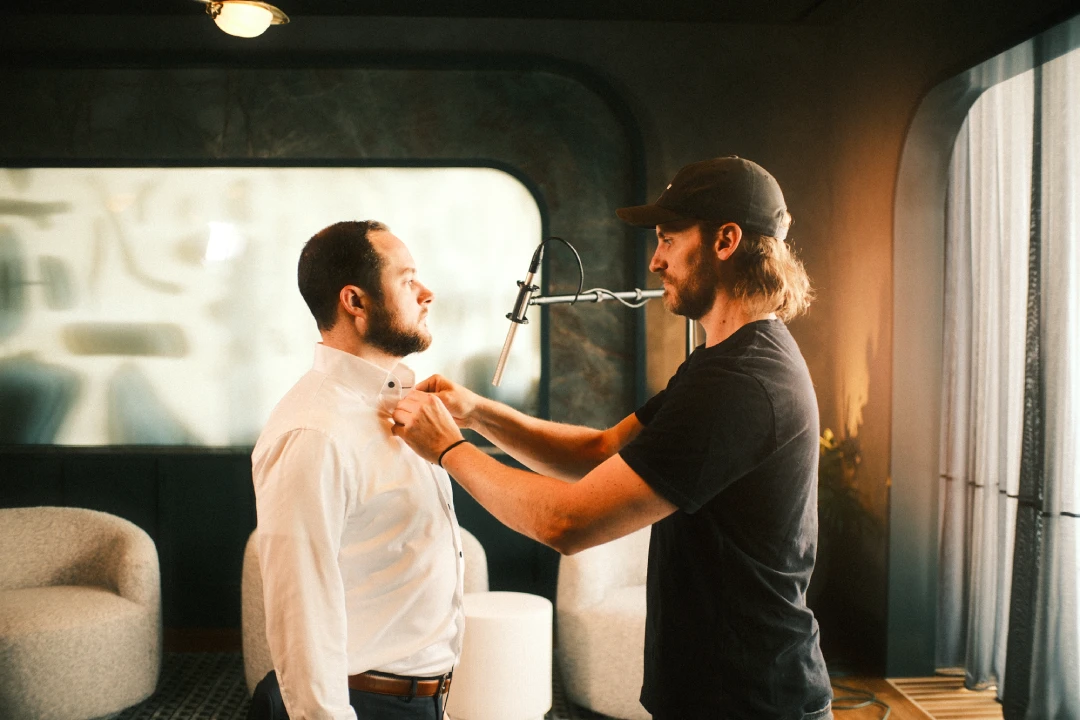
Certain things are cheap on set and impossible later. Get clean interview audio with the subject saying each key point as a standalone sentence, so a clip can start cold without setup. Shoot every important moment in both horizontal and vertical framing, or wide enough to crop to both. Collect B-roll of the mundane specifics: hands on the product, the room, the whiteboard, the walk-in. Capture at least one unscripted exchange, because the most shared clip is usually the one nobody wrote. And get stills while the lighting is already up.
An example of the pattern
The same logic applies to source material you are already generating. Slate turns every webinar into a LinkedIn content engine by treating a recorded session as a shoot: the session is the capture, and the cutdown ladder runs afterward, producing weeks of posts from an hour that was going to happen regardless. If you are running webinars, panels, or customer calls, you already have a production line and are probably throwing away the output.
The cost per asset math
This is where planning pays for itself. A production day priced at $12,000 that yields a single hero video costs $12,000 per asset. The same day yielding 30 usable pieces costs roughly $400 each, and the incremental cost of the extra 29 is mostly editorial time, not crew time, because the expensive part, getting a crew and your people in a room, already happened. Shooting quarterly with a distribution plan beats shooting monthly without one, on both cost and volume.
Where teams lose the multiplier
Four failure modes, all preventable. No distribution plan before the shoot, so coverage is wrong. One approver with no time, so cutdowns sit unreviewed until they are stale. No naming or storage convention, so nobody can find the clip they remember. And treating the hero piece as the finish line, so the shorts never get made. Fix the plan and the approval path and the rest follows.
The short version
Scope the shoot backward from the calendar. Capture standalone soundbites, both framings, and real specifics. Ladder the edit from hero down to shorts, stills, and quotes. Done that way, one day feeds a month and the cost per asset drops by an order of magnitude. If you are deciding what the hero piece should even be, start with what a brand anthem video is, then build the ladder underneath it.